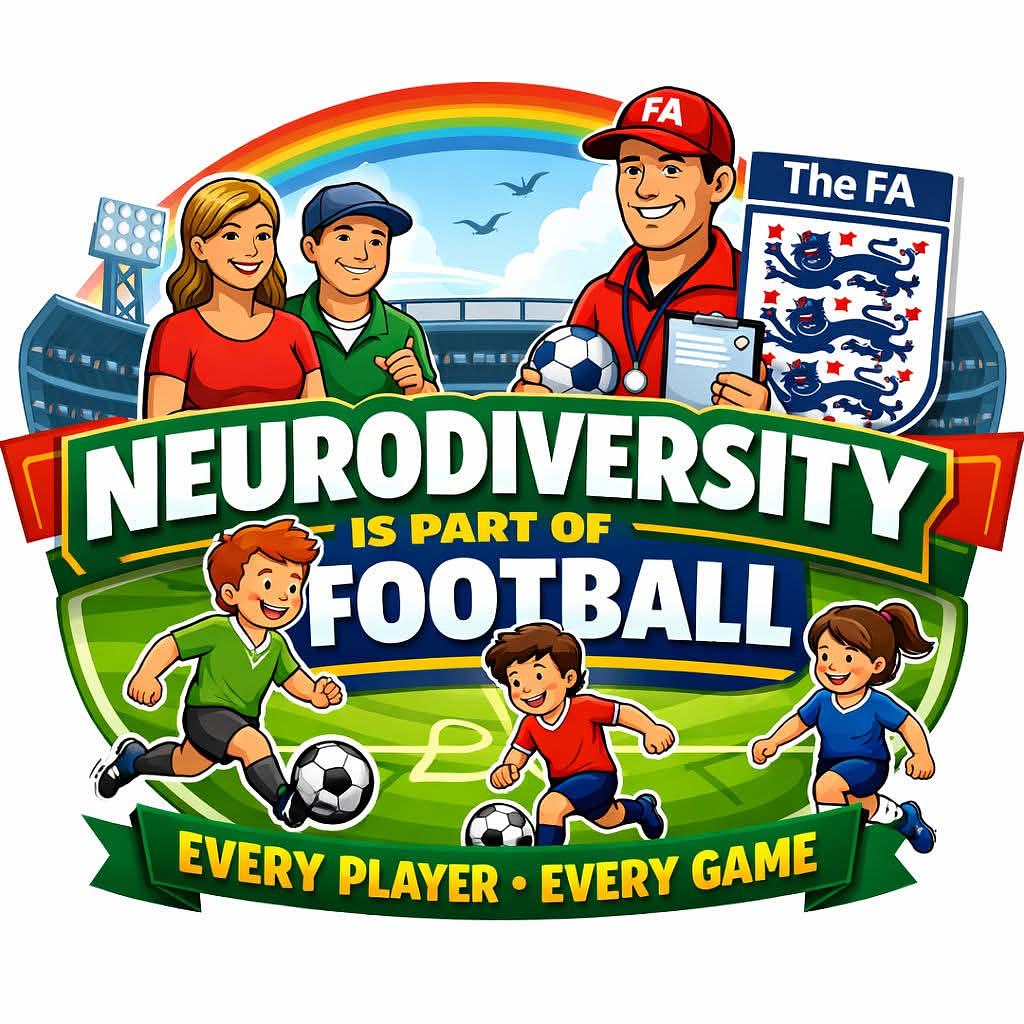
⚽ Neurodiversity in UK Grassroots Football: Facts That Can’t be Ignored
📊 How common is neurodiversity among grassroots players?
When we apply UK population data and sport-specific evidence, the picture is very clear:
Around 15–20% of children in the UK are neurodivergent
(including ADHD, autism, dyslexia, dyspraxia, and related profiles).
ADHD alone affects approximately 5–7% of children.
Autism affects around 1–2% of children, with many still awaiting diagnosis.
Long NHS waiting lists mean thousands of children playing grassroots football are currently undiagnosed, especially in mixed-ability and girls’ football.
👉 In a squad of 12–14 children, it is statistically likely that at least 2–3 players are neurodivergent, diagnosed or not.
This is not a niche issue.
This is the reality of grassroots football in 2026.
❗ “They’re only volunteers” is NOT a get-out clause
Yes, grassroots coaches are volunteers.
No one is disputing that.
However:
Volunteering does not remove safeguarding or inclusion responsibilities
Volunteering does not override The FA’s Respect, Safeguarding and Inclusion Standards
Volunteering does not excuse refusing education
If a coach chooses to work with children, they accept a basic duty of care.
That includes:
Understanding that not all children learn, regulate, communicate or behave the same way
Making reasonable adjustments (not clinical interventions)
Being open to basic neurodiversity education, which the FA and County FAs actively provide
Refusing to learn while continuing to coach children is a choice, not a limitation.
🧠 Most neurodivergent children are NOT diagnosed yet
This is critical:
Many children in grassroots football do not have a diagnosis
Some parents are still waiting years for assessments
Some families choose not to disclose due to stigma or fear of exclusion
That means:
Coaches will often be supporting neurodivergent players without being told
“No diagnosis = no responsibility” is factually wrong and ethically unsafe
Inclusive coaching is about practice, not paperwork.
🚩 What happens when coaches refuse responsibility or education?
When volunteer coaches say things like:
“We’re not trained for that”
“We treat all children the same”
“That’s the parents’ problem”
“They should play somewhere else”
The outcome is predictable and well-documented:
Neurodivergent children drop out of football earlier
Girls and marginalised players are disproportionately affected
Parents disengage
Clubs lose players
Grassroots football fails its inclusion mission
This is not because children “can’t cope”.
It is because environments refuse to adapt.
📚 Education exists — refusal is the problem
The FA and County FAs already offer:
Neurodiversity and inclusion CPD
ADHD and autism awareness workshops
Safeguarding frameworks that include SEND
Guidance on reasonable adjustments in training and matches
So when a coach refuses education, it is not due to lack of access.
It is due to:
Attitude
Resistance to change
A misunderstanding of responsibility
✅ What grassroots football SHOULD stand for
Grassroots football exists to:
Develop players
Keep children active
Build confidence
Create belonging
It cannot do that while excluding 15–20% of the playing population.
Neurodiversity inclusion is not about:
Lowering standards
Making excuses
Turning coaches into therapists
It is about:
Awareness
Flexibility
Communication
Respect
Willingness to learn
📢 Final message to grassroots football hubs and volunteers
If you coach children:
Neurodiverse players are already in your sessions
Diagnosis or not, they are your responsibility
Inclusion is part of safeguarding
Education is part of volunteering
Grassroots football does not need perfect coaches.
It needs open-minded, informed, responsible ones.
Ignoring neurodiversity doesn’t make it disappear.
It just pushes children out of the game.
⚽ And that is a loss grassroots football cannot afford.
📊 How common is neurodiversity among grassroots players?
When we apply UK population data and sport-specific evidence, the picture is very clear:
Around 15–20% of children in the UK are neurodivergent
(including ADHD, autism, dyslexia, dyspraxia, and related profiles).
ADHD alone affects approximately 5–7% of children.
Autism affects around 1–2% of children, with many still awaiting diagnosis.
Long NHS waiting lists mean thousands of children playing grassroots football are currently undiagnosed, especially in mixed-ability and girls’ football.
👉 In a squad of 12–14 children, it is statistically likely that at least 2–3 players are neurodivergent, diagnosed or not.
This is not a niche issue.
This is the reality of grassroots football in 2026.
❗ “They’re only volunteers” is NOT a get-out clause
Yes, grassroots coaches are volunteers.
No one is disputing that.
However:
Volunteering does not remove safeguarding or inclusion responsibilities
Volunteering does not override The FA’s Respect, Safeguarding and Inclusion Standards
Volunteering does not excuse refusing education
If a coach chooses to work with children, they accept a basic duty of care.
That includes:
Understanding that not all children learn, regulate, communicate or behave the same way
Making reasonable adjustments (not clinical interventions)
Being open to basic neurodiversity education, which the FA and County FAs actively provide
Refusing to learn while continuing to coach children is a choice, not a limitation.
🧠 Most neurodivergent children are NOT diagnosed yet
This is critical:
Many children in grassroots football do not have a diagnosis
Some parents are still waiting years for assessments
Some families choose not to disclose due to stigma or fear of exclusion
That means:
Coaches will often be supporting neurodivergent players without being told
“No diagnosis = no responsibility” is factually wrong and ethically unsafe
Inclusive coaching is about practice, not paperwork.
🚩 What happens when coaches refuse responsibility or education?
When volunteer coaches say things like:
“We’re not trained for that”
“We treat all children the same”
“That’s the parents’ problem”
“They should play somewhere else”
The outcome is predictable and well-documented:
Neurodivergent children drop out of football earlier
Girls and marginalised players are disproportionately affected
Parents disengage
Clubs lose players
Grassroots football fails its inclusion mission
This is not because children “can’t cope”.
It is because environments refuse to adapt.
📚 Education exists — refusal is the problem
The FA and County FAs already offer:
Neurodiversity and inclusion CPD
ADHD and autism awareness workshops
Safeguarding frameworks that include SEND
Guidance on reasonable adjustments in training and matches
So when a coach refuses education, it is not due to lack of access.
It is due to:
Attitude
Resistance to change
A misunderstanding of responsibility
✅ What grassroots football SHOULD stand for
Grassroots football exists to:
Develop players
Keep children active
Build confidence
Create belonging
It cannot do that while excluding 15–20% of the playing population.
Neurodiversity inclusion is not about:
Lowering standards
Making excuses
Turning coaches into therapists
It is about:
Awareness
Flexibility
Communication
Respect
Willingness to learn
📢 Final message to grassroots football hubs and volunteers
If you coach children:
Neurodiverse players are already in your sessions
Diagnosis or not, they are your responsibility
Inclusion is part of safeguarding
Education is part of volunteering
Grassroots football does not need perfect coaches.
It needs open-minded, informed, responsible ones.
Ignoring neurodiversity doesn’t make it disappear.
It just pushes children out of the game.
⚽ And that is a loss grassroots football cannot afford.